
Updated
Benefits of archery: movement, focus and community
Archery brings together physical activity, precise movement and attention to a single task. It can be an appealing part of an active lifestyle, especially if you enjoy learning at your own pace and seeing your shots gradually change.

What physical effort does archery involve?
One hand holds the bow while the other draws the string, and your body maintains its position. The muscles of the arms, shoulders and back are active. A study measuring electrical activity in the muscles confirms that the bow arm and the drawing arm perform different tasks. This small laboratory study describes the movement; it does not assess long-term improvements in health.
Practice also involves learning a stable stance, hand-eye coordination and smooth movement. At the beginning, a bow you can handle comfortably and a repeatable technique matter more than a high draw weight. A better shooting position is a sporting skill; it should not be expected to correct your everyday posture or reduce back pain on its own.
Where does archery fit into an active week?
Walking to the target and back adds movement, but the demands of a session depend on the distance, number of shots, breaks and individual capabilities. The length of a session alone does not tell you how much time you spent being moderately or vigorously active.
The World Health Organization’s general guidelines recommend that adults do at least 150–300 minutes of moderate-intensity aerobic activity or 75–150 minutes of vigorous-intensity activity each week, along with exercises to strengthen the major muscle groups on at least two days. You can combine archery with brisk walking, cycling or another activity you enjoy. These recommendations and the general benefits of physical activity do not prove that every archery session has the same effects.
Focusing on one action
On the shooting line, you need to remember a sequence of actions, notice your body position and start again after each shot. A practical goal might be to follow one piece of coaching advice throughout an end of arrows. You practise directing your attention to a specific sporting task, and you can track progress through the consistency of your movement as well as your score.
The relationship between archery and attention is being studied, but the evidence remains limited. In a study published in 2020, 40 children had better attention-test results after four weeks of sessions. The small sample and the use of assessments before and after the programme do not allow this result to establish better learning outcomes or treatment for attention disorders.
A break from the day and time with others
A clear task, time away from your phone and conversations about a shared interest can be an enjoyable part of the day. Archery GB highlights concentration, enjoyment of sport and opportunities to meet other people. These are experiences of participation described by a sporting organisation, rather than guaranteed therapeutic effects.
Some people enjoy quietly repeating the movement; others prefer discussing an end with fellow archers or preparing for a competition. After an unsuccessful shot, you can practise returning your attention to the next attempt, while small, achievable goals help you notice your progress. Competitions can also bring pressure, so recreational archers can choose a pace and goals that feel right for them.
Opportunities for people with disabilities
Archery uses a range of adaptations. World Archery describes shooting from a seated position, adapted release aids and other assistive equipment. These illustrate different ways to take part, but the particular venue, equipment and support need to be discussed in advance. Participation in sport and medical rehabilitation have different aims.
How can you start with an appropriate level of effort?
- Start with technique. Discuss the bow’s draw weight, your movement and rest breaks with the coach.
- Pay attention to how you feel. Report pain straight away; it does not need to be treated as an essential part of progress. If you have an injury or movement restrictions, discuss a suitable level of activity with a healthcare professional.
- Look beyond the score. Notice whether the sequence of actions becomes easier to repeat, whether you enjoy the session itself and whether you want to return.
- Follow the shooting procedure. Shoot and approach the targets only when instructed by the person leading the session.
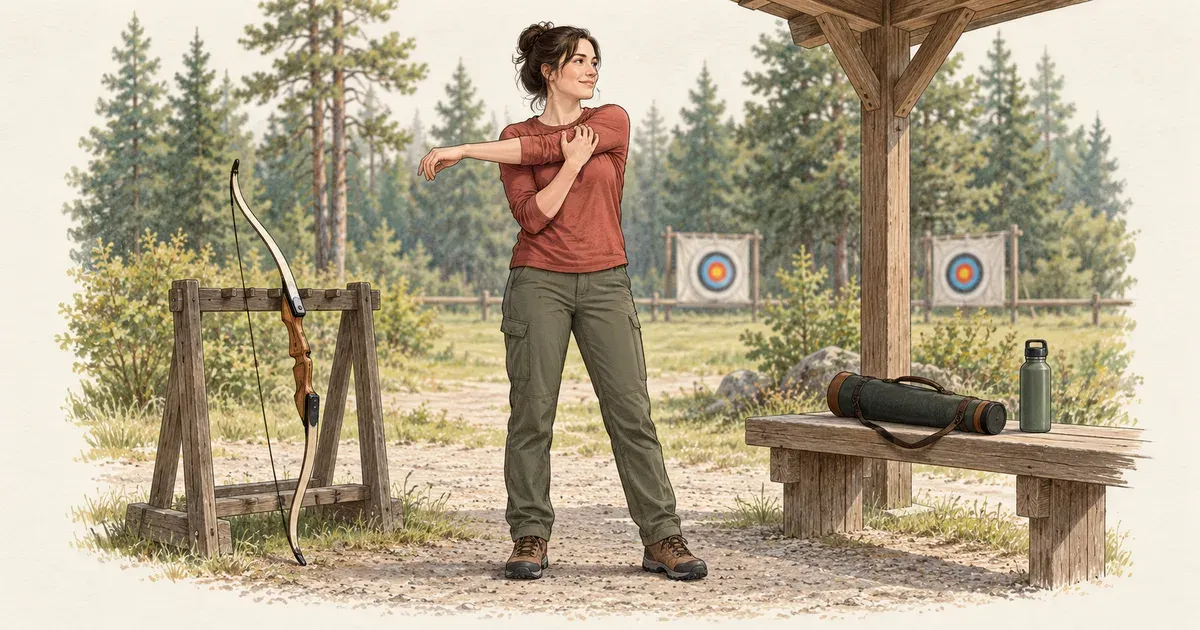
Read about your first steps in the beginner’s guide. If you would like to try archery in Klaipėda, explore the training information and contact the club to arrange your first visit.
Frequently asked questions
Does archery help with concentration?
During practice, you learn to focus on the shot sequence and return to it after a distraction. Small studies have reported promising attention-test results, but they cannot support promises of better grades, improved work performance or treatment for attention disorders.
Does archery reduce stress?
Focusing on a specific action, enjoying an activity and spending time with others may offer a break from everyday worries. The experience is individual: a new task or a competition can also feel stressful. No particular reduction in stress or time frame can be promised.
Is archery enough physical activity on its own?
That depends on the intensity and duration of practice, and on your other activities. Aiming, waiting and walking to the target involve different levels of effort. It is worth including aerobic activity and exercises for the major muscle groups in your week, in line with general physical activity recommendations.
Can I start if I have shoulder or back problems?
This needs an individual assessment. Drawing a bow places a load on the shoulders and arms. If you have pain or are recovering from an injury, discuss an appropriate level of activity with a doctor or physiotherapist, and tell the coach about any movement restrictions in advance.
Sources and further reading
- World Health Organization: physical activity and general recommendations
- Archery GB: taking part in archery, concentration and social connection
- Dorshorst et al. (2022): a study of upper-limb muscle activity in archery
- Ustun and Tasgin (2020): children’s attention tests before and after archery sessions
- World Archery: para archery and adaptive equipment