
Updated
Archery for children and teenagers: a parent’s guide
Start your child’s introduction to archery with a conversation with the coach. Agree on their participation, arrange equipment they can control and understand the range rules. It also helps to plan both the visit itself and how you will support your child after their first shots.

At what age can a child start?
Age alone does not tell you whether a particular session will suit your child. Different programmes have their own entry requirements, and a beginner’s bow needs to match the child’s build and abilities. Archery GB advises families to ask their chosen club about age limits.
Discuss with the coach whether your child can listen to a short instruction, wait their turn, stop when told and say when they do not understand something. Their ability to lift and control a suitable bow should be assessed during a supervised session. There is no need to test their strength beforehand with an adult’s bow.
Ask teenagers what interests them, too: learning the shooting technique, trying a new leisure activity or perhaps competing in the future. For a first visit, a willingness to try and learn the rules is enough.
What parents should arrange before visiting
When contacting the club, include your child’s age, whether they have tried archery before and when you could visit. Before setting off, discuss:
- Participation: whether the session is suitable for your child and how to register.
- Time and place: the meeting address, start time, session length and arrival instructions.
- Supervision: who will lead the session, where an accompanying adult can wait and how drop-off and collection will work.
- Equipment and price: what equipment will be available and what the session includes.
If your child needs instructions presented differently or support to take part, discuss this before visiting. This allows the coach and family to assess whether the particular session is suitable.
Supervision and range rules
The first thing to learn is when to act and when to wait. Before shooting begins, the coach should explain the shooting and waiting areas, commands and arrow collection. Parents should know the same rules:
- Only nock an arrow and shoot from the shooting line, with permission.
- A bow with an arrow nocked must point only towards the assigned target.
- When a stop command is given, stop shooting as instructed by the coach.
- Approach the targets only when the coach allows it; do not cross the line to pick up a dropped arrow.
- Walk on the range, and do not stand behind someone who is pulling arrows from a target.
- Do not release a drawn bowstring without an arrow: this can damage the bow.
Family members watching the session should stay in the designated area. If your child becomes tired, feels pain or finds it hard to follow instructions, tell the coach and stop.
Equipment should fit your child now
For a beginner, controlling the bow and learning the movement matter more than a higher draw weight. Do not buy a bow simply because it is labelled “for children” or with the expectation that your child will grow into it. Speak to the coach first and try a suitable setup.
| Equipment | What to discuss with the coach |
|---|---|
| Bow | Its size and draw weight, and whether your child can control it while maintaining the posture being taught. |
| Arrows | The correct length and stiffness for the child’s draw length and bow. Arrows that are too short are unsuitable. |
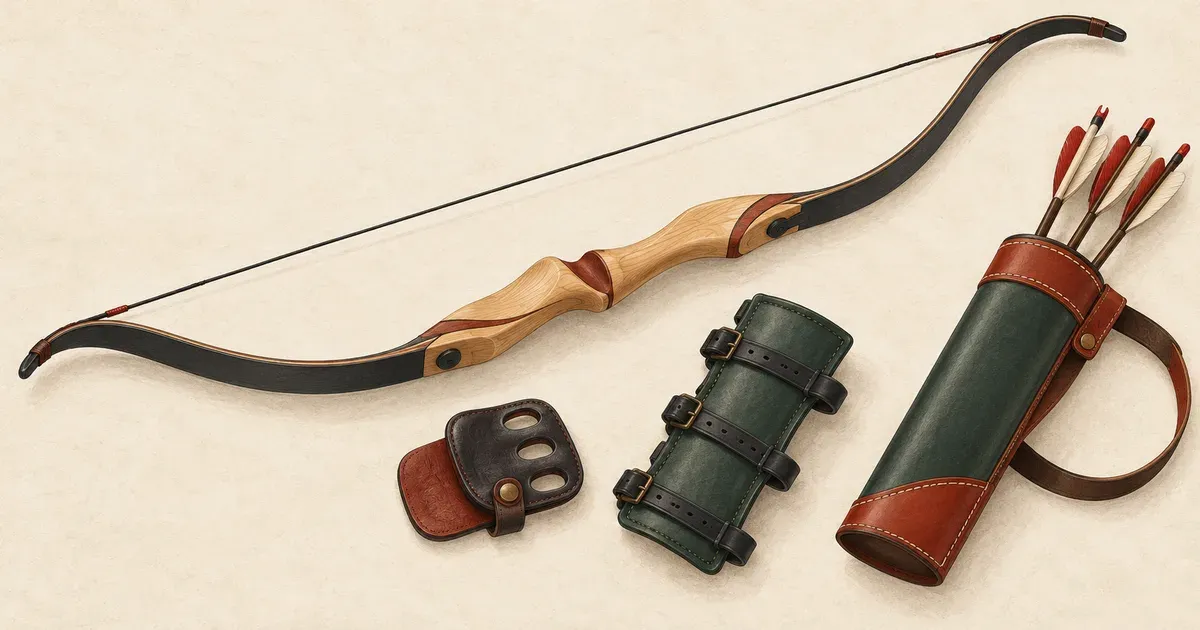
| Protective equipment | A well-fitting arm guard and the finger protection required for the shooting style. |
Choose comfortable clothing that allows free movement and closed-toe shoes. Loose hood cords, wide cuffs or other dangling items must stay clear of the bowstring’s path. We cover buying your own equipment in more detail in our guide to choosing your first bow.
How to support your child after their first shots
After the session, ask what they enjoyed, what they found interesting to learn and whether they would like to return. At first, notice specific actions: listening to a command, waiting patiently or repeating a movement consistently. Hitting the centre is not the only sign of progress. World Archery’s beginners’ programme also assesses skills and knowledge.
Leave technical corrections to the coach so your child does not hear conflicting instructions at the same time. Support their effort and interest without comparing scores with others. Discuss regular training or a first competition together with your child and the coach when that interest develops.
Trying archery in Klaipėda
To discuss your child’s participation, contact Klaipėda Archers about a trial session. Include their age, experience and a convenient time. Once the visit is arranged, you can prepare for their first introduction to the sport.
For general information about learning, visit our training page. For the basics of shooting, read our beginner’s guide.
Frequently asked questions
At what age can a child start archery?
Entry requirements depend on the club’s programme and available equipment. Before visiting, tell the coach your child’s age and discuss whether they are ready to follow commands and handle a bow selected for them.
Do we need to buy a bow before the first session?
Speak to the coach first and find out what equipment is available for an introduction to the sport. Choose a personal bow and arrows after trying suitable equipment in practice, taking your child’s draw length and ability to control the bow into account.
Do parents need to stay during the session?
Agree with the club in advance whether parents should stay, where they can wait and how to collect the child. On arrival, use the spectator areas indicated by the coach and do not enter the shooting area without permission.
How can I ask about a trial archery session in Klaipėda?
Contact Klaipėda Archers through the contact page. Include your child’s age, previous experience and a convenient time to visit. Before coming, confirm whether they can take part, along with the location, price and equipment arrangements.