
Updated
Olympic recurve, traditional, compound and barebow: what is the difference?
An Olympic recurve bow has a sight, barebow is shot without one, and a compound bow uses a mechanism that reduces the force needed to hold it at full draw. Traditional bows offer other choices of construction and shooting style. When choosing, it helps to distinguish the bow’s shape, its competition category and how you want to train.

Bow types at a glance
Recurve describes a bow’s construction, while Olympic recurve, barebow and traditional refer to different equipment setups and shooting rules. The word “recurve” alone therefore does not tell you enough, whether you see it in a shop or in competition regulations.
| Feature | Olympic recurve | Barebow | Traditional / longbow | Compound |
|---|---|---|---|---|
| Aiming | With a sight without a magnifying lens | Without a sight, often using the arrow point | Without a sight; the method depends on the style | Usually with a magnifying scope |
| Releasing the string | With the fingers, using a finger tab | With the fingers, using a finger tab | With the fingers, according to the rules of the chosen style | Usually with a mechanical release aid |
| Equipment features | Sight, stabilisers and a draw-check device | No sight or stabilisers; weights are permitted within the rules | Fewer accessories; traditional and longbow have separate rules | Cams, cables and a set draw length |
| What may appeal to you | Working with a sight and a consistent shot sequence | Learning to aim without a sight | A simpler setup and traditional shapes | Tuning the mechanism and working with a release aid |
Olympic recurve: a sight and a repeatable movement
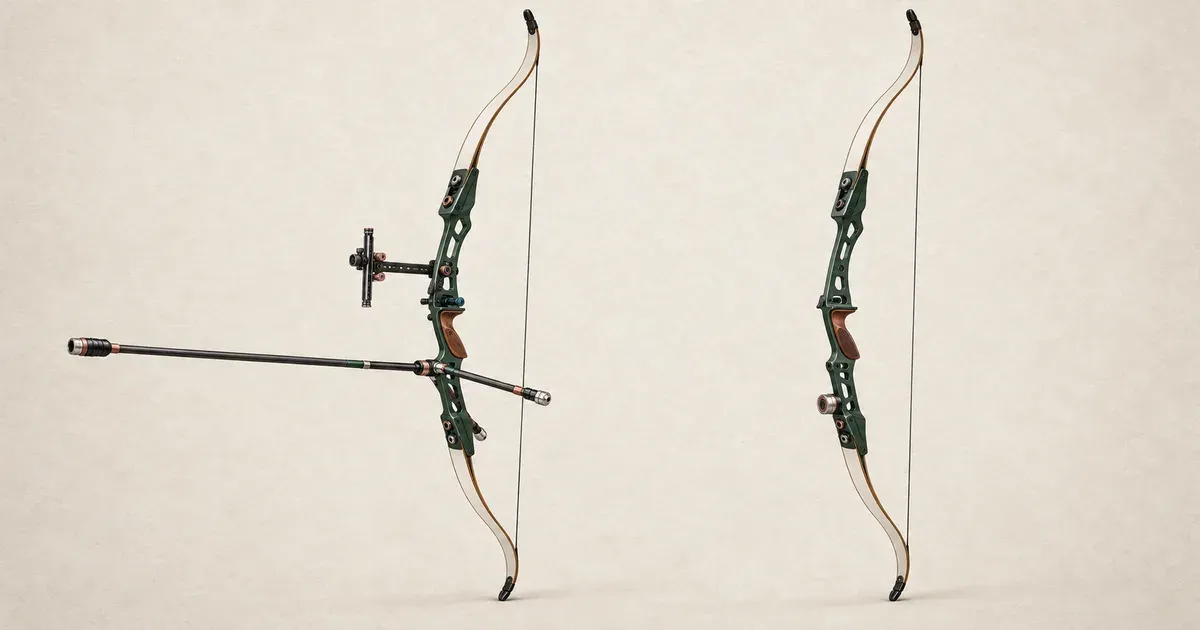
The tips of a recurve bow’s limbs curve away from the archer. A competition setup consists of a riser, limbs, string and arrow rest, with a sight and stabilisers added. Stabilisers help balance the bow and reduce vibration. On many models, the limbs can be removed for transport or replaced.
The archer draws and releases the string with their fingers. Competition setups often include a clicker, a thin strip that clicks when the intended draw length is reached. The sight provides a clear aiming reference, but a repeatable anchor point against the face, draw and release are still essential to the result.
Consider this style if you want to learn to shoot with a sight and are interested in Olympic recurve competition. You do not need every accessory in a competition setup on your first day.
Barebow: no sight, but a defined technique
Barebow often uses the same modern recurve riser and limbs, but without a sight or stabilisers. Weights and arrow-rest adjustments are allowed within the rules. It is a competition category in its own right, rather than another name for a traditional bow.
The arrow point can be used to aim. One characteristic technique is stringwalking: the position of the fingers on the string below the arrow changes with the distance. Shooting without a sight is therefore not necessarily “instinctive” or based on feel alone.
Consider barebow if you are interested in aiming without a sight and want to explore how shooting technique can be adapted to the distance.
Traditional and longbow: know the category
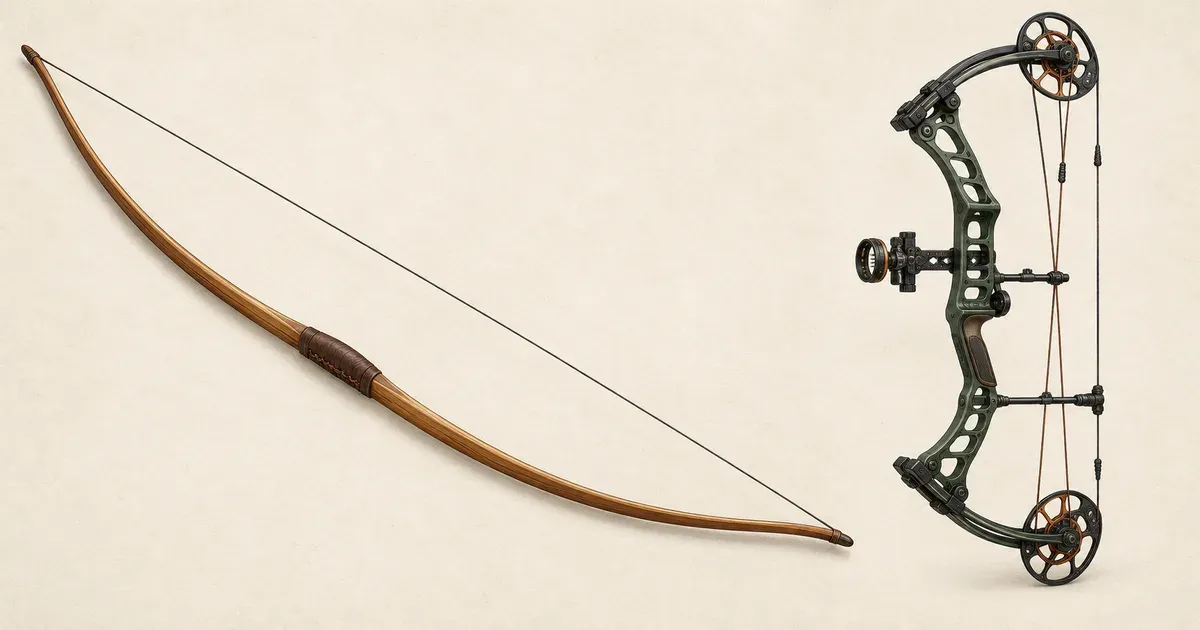
In everyday language, “traditional bow” can mean various historical shapes or designs inspired by them. Competition terminology is more specific: in World Archery 3D events, traditional and longbow are separate categories. A wooden appearance alone does not tell you which category a bow will fit.
The traditional category places restrictions on riser construction and accessories. On a braced longbow, the string touches the bow only at the string nocks at its tips; this category is not limited to the historical English D-shaped bow. World Archery longbow competitions use wooden arrows with natural feather fletching.
These styles also use deliberate aiming methods, such as judging the position of the arrow point relative to the target. Consider a traditional bow if you like its shape and the idea of shooting with fewer accessories. Before buying a bow for competition, check the rules of the specific category.
Compound: less holding force and more to tune
A compound bow’s system of cams and cables changes how the draw weight builds and falls. At full draw, holding the bow requires less force than pulling it back through the draw cycle. This reduction is called let-off. The amount depends on the bow; you still need enough strength to overcome the initial draw weight.
A magnifying scope, a peep sight in the string and a mechanical release aid are common in competition setups. The bow is adjusted to the archer’s draw length. Operating the release aid and developing a consistent shot sequence are skills to learn in their own right: the mechanism does not make the shot for the archer.
Consider compound if this equipment and its tuning interest you. Before choosing a bow, discuss who will fit it, check its cables and string, and help you learn to use the release aid.
Is compound an Olympic bow now? What changes at LA28
The Los Angeles 2028 Olympic Games will include a compound mixed team event. Each team will consist of one woman and one man, with 12 teams qualifying. This is confirmed in the LA28 qualification system published by World Archery.
The recurve programme retains the men’s and women’s individual events, men’s and women’s team events, and mixed team event. There are no compound individual events in the LA28 programme. The statement that only recurve bows are used at the Olympics therefore no longer applies when describing LA28.
Which bow should a beginner choose?
Start by asking what kind of archery you want to learn, then choose a setup fitted to you. No bow type guarantees an easy start. A manageable draw weight and help with learning matter more than an impressive-looking bow.
- Choose a style that interests you. Shooting with a sight, without one or with a mechanical release aid offers different experiences worth discussing with a coach.
- Separate the bow type from the competition format. Your bow type and whether you shoot at a circular target, on a field course or in a 3D event are separate choices. Our comparison of archery formats explains them.
- Fit the setup to you. Matching a bow and arrows depends on draw length and draw weight. We cover measurements and the order of purchases in choosing your first bow.
- Budget for the full setup. The bow, arrows, protective equipment, sight or release aid, and maintenance all contribute to the cost. Compare complete setups rather than the price of the bow alone.
To start archery in Klaipėda, see our archery training information and contact the club. Let us know whether you have shot before and which style interests you. This will make it easier to discuss a suitable starting point and equipment.
Frequently asked questions
Do recurve and Olympic bow mean the same thing?
Recurve describes the shape of the limb tips, which curve away from the archer. An Olympic bow is a competition recurve setup with a sight and permitted accessories. A recurve bow can also be used for barebow or traditional archery if it meets the rules for that category.
Is barebow a traditional bow?
In World Archery competitions, barebow and traditional are separate categories. Barebow has no sight or stabilisers, but allows different equipment adjustments and aiming techniques from the traditional category.
Will compound bows be used at the Olympics?
Yes. A compound mixed team event has been confirmed for LA28, with one woman and one man in each team. Compound individual events are not part of the LA28 programme.
Do beginners have to learn Olympic recurve first?
There is no compulsory order. Choose your starting point around the style you want to learn, properly fitted equipment and access to coaching. Your first choice does not have to be permanent.
Sources and further reading
- World Archery: bows and equipment categories
- World Archery: recurve equipment and shooting technique
- World Archery: barebow equipment and aiming
- World Archery: how compound bows work
- World Archery: traditional and longbow categories (29 September 2026)
- World Archery: LA28 Olympic Games qualification (5 February 2026)
- World Archery: current competition and equipment rules